Heat Pump vs Gas Hot Water in Chipping Norton
A heat pump runs cheaper than gas storage and electric storage, at $205 to $435 a year on peak tariff, according to Sustainability Victoria's modelled 2025 figures. It costs more to install, though. The heat pump vs gas hot water pick comes down to household size, your tariffs, outdoor space and whether the gas connection stays. Your Chipping Norton household leans on hot water every day, so it pays to get the type right.
The plumbers at Mr Local Plumbing install gas, electric and heat pump hot water systems, and the call-out fee is $0. In NSW, a licence or a certificate covers any plumbing, draining and gasfitting work, and our licensed plumbers and drainers hold those classes. Every hot water installation opens with a written quote in hand before the work starts. Three numbers frame the comparison:
- A heat pump runs at $205 to $435 a year on peak tariff, according to Sustainability Victoria's modelled 2025 figures.
- What's The Damage's November 2026 Sydney guide puts electric storage at $760 to $2,850 installed, and heat pumps at $2,850 to $5,700.
- An eligible heat pump, or a solar hot water system, earns an upfront discount under the NSW Energy Savings Scheme.
Hot Water Systems Compared
A water heater is usually behind the hot water running out mid shower, or a bill that climbs every quarter. A heat pump hot water unit works differently: it pulls warmth from the surrounding air into its tank, like an air conditioner in reverse, per Rheem's guide. Each system heats water differently, and the differences land in the running costs, the install price and the space each needs. Pick a type below, and book the replacement from there:
Is Gas Hot Water Being Phased Out?
No, no NSW law phases out gas hot water today. CHOICE (the consumer group) cites evidence that gas hot water may become the dearest option by 2030, so plan the switch for the day the old unit dies. On CHOICE's evidence, gas appliances pollute indoor air with carbon monoxide, nitrogen dioxide and particulates. Hot water systems sit outdoors almost always, though, and CHOICE notes an indoor unit needs venting outside.
A working gas hot water system doesn't need ripping out before its time. For keeping the old unit going until replacement day, our hot water repairs page covers the common faults and the fixes.
Running Costs Compared
Sustainability Victoria's calculator, published via CHOICE, works out the annual running cost of each system type, so the comparison runs on one set of numbers. The figures cover one to four people in a typical Melbourne home, using 50 to 150 litres a day, with gas prices as of mid-2024. They are not Sydney prices.
A heat pump runs at $205 to $435 a year on peak tariff, and gas instant at $235 to $655, according to Sustainability Victoria's 2025 figures. The two bands overlap. Gas storage sits at $445 to $780 a year, against $440 to $1,015 for electric storage on peak and $380 to $780 off peak, according to Sustainability Victoria's 2025 model. Solar with a natural gas booster runs at $100 to $305 a year, according to Sustainability Victoria's 2025 model.
Three things move the bill: the tariff, the household size and solar panels on the roof.
Tariffs and Solar
The timer heats the tank in the off-peak period, so an overnight rate or a time of use plan keeps an electric system's running costs down. Rooftop solar pulls a heat pump lower still. Solar panels cut a heat pump's annual cost to $140 to $300 a year, against $205 to $435 without solar, according to Sustainability Victoria's 2025 figures. A solar hot water system may carry an electric booster element, or a gas burner. Solar hot water has its own page, and the booster decision belongs there.
How Each System Heats Water
Gas and electric hot water split into five types, not two. Three run on electricity: a conventional resistive element, a heat pump and an instantaneous unit. Two run on natural gas: a storage tank and an instantaneous one. Whichever type suits the house, the sections below show how each one heats:
Heat Pump Hot Water
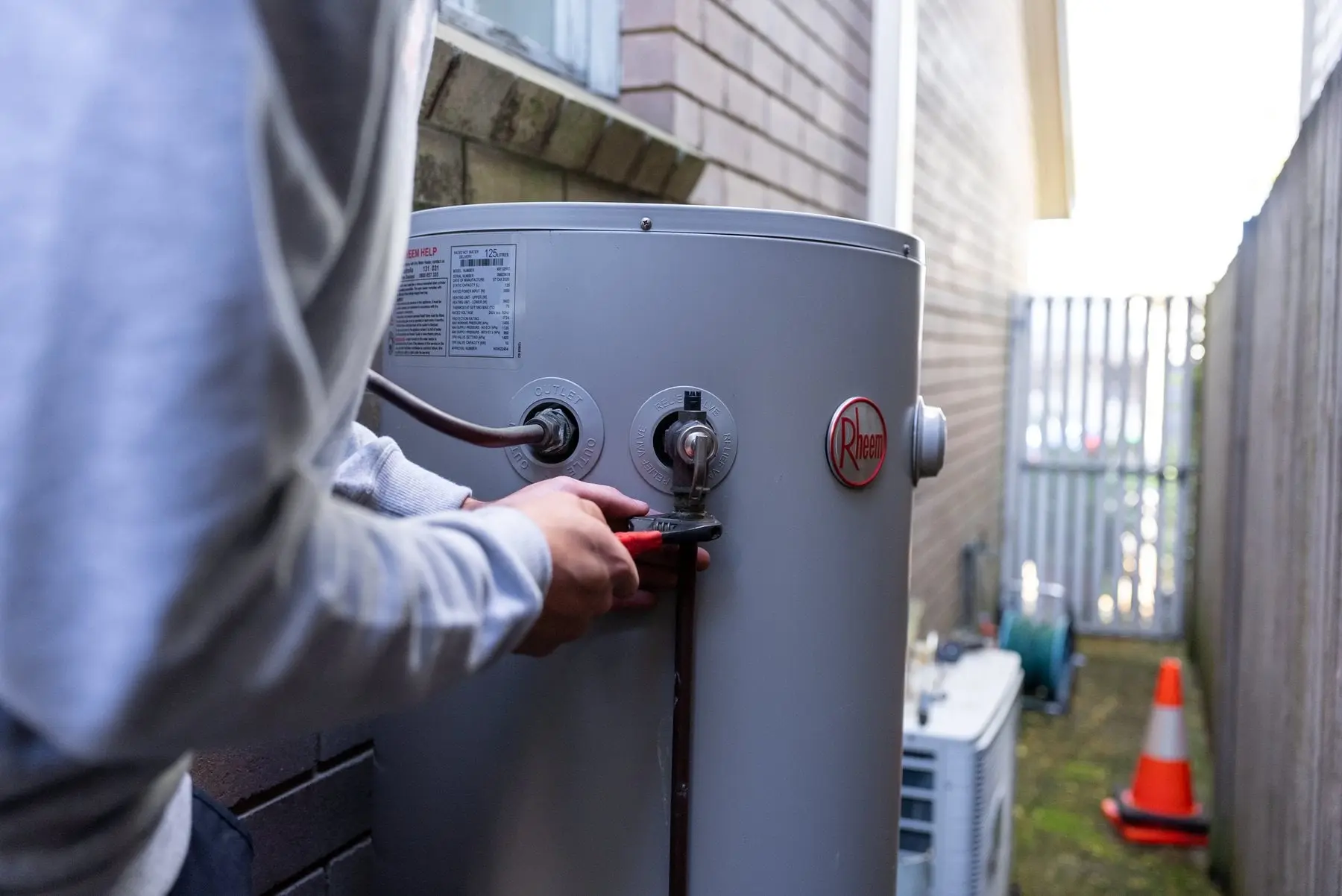
A heat pump hot water system draws warmth out of the surrounding air into the tank's water, working the way an air conditioner does in reverse, per Rheem's guide.
The cycle runs in four steps. The refrigerant absorbs heat as air moves over the evaporator coil, and a compressor squeezes the warmed vapour into a hot gas. The heat then crosses a heat exchanger into the tank, and the refrigerant returns to liquid so the cycle repeats.
A heat pump's efficiency is written as a COP (coefficient of performance). The AmbiPower 280e heat pump averages a COP of 5.2, supplying 5.2 times as much heat energy as it consumes in electricity, according to Rheem. A heat pump can cut hot water energy use by up to 73% against a similar-sized electric storage system.
Rheem's guide puts the higher upfront cost down to complex technology and extra components. The unit also needs sufficient outdoor space for air circulation, so measure where it will go before buying. Rheem's guide rates its heat pumps as suiting homes of up to six people. The cylinder warranty runs 7 years on Rheem heat pumps, against up to 12 years on electric storage, according to Rheem's warranty. Siting, noise and the changeover sit in full on our heat pump hot water page.
Gas Hot Water
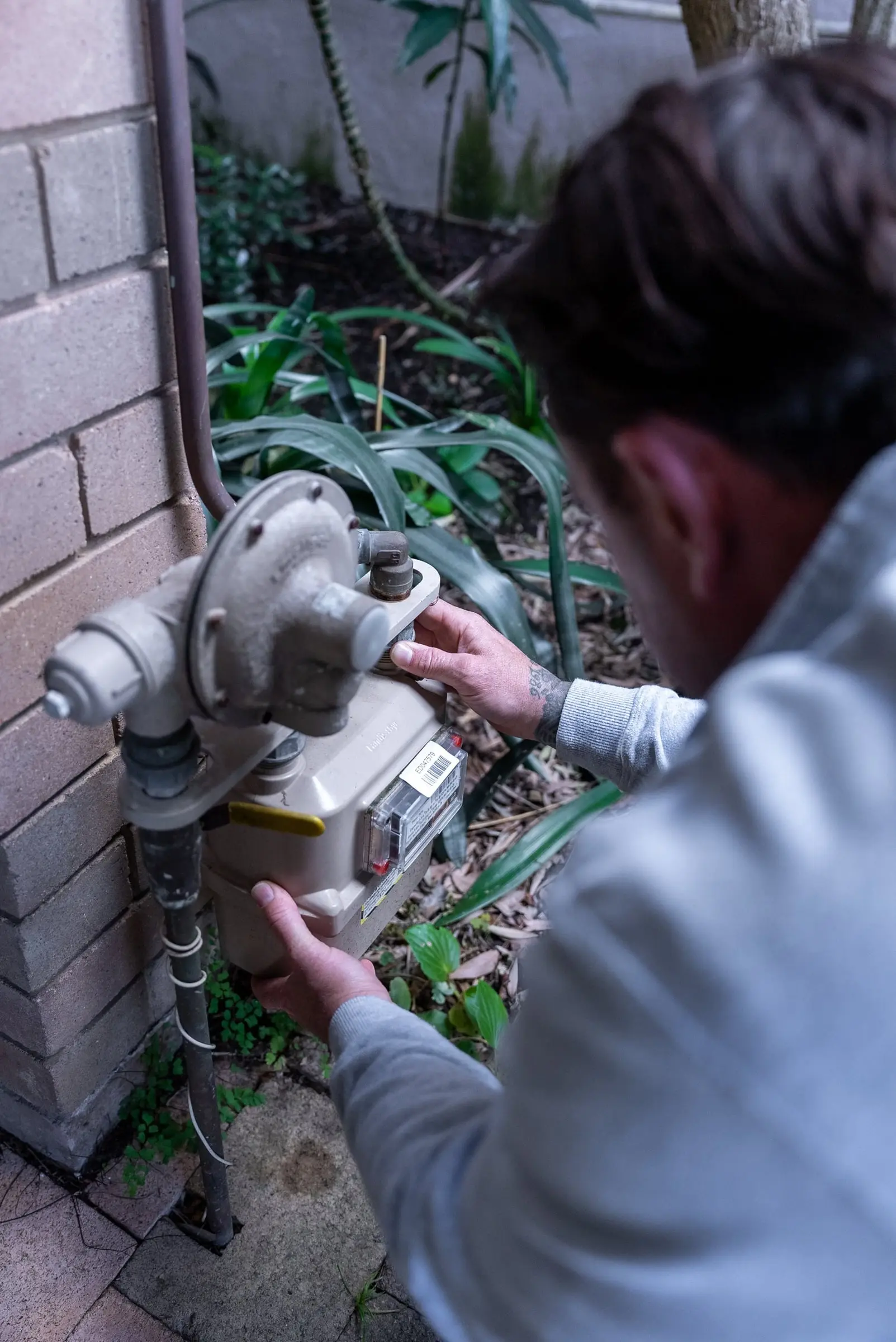
Gas hot water comes in two types on natural gas supply: a storage tank and an instantaneous (continuous flow) unit. Gas storage burns a pilot flame continuously, so the tank always uses some gas, even with every tap off. Continuous flow heats water only when the hot tap is turned on, which suits a small household, or a standalone unit powering a remote part of the house. The tank versus tankless decision weighs a steady supply against heating only when a tap runs. Flues and faults sit with the storage versus tankless decision on our gas hot water page.
Electric Hot Water
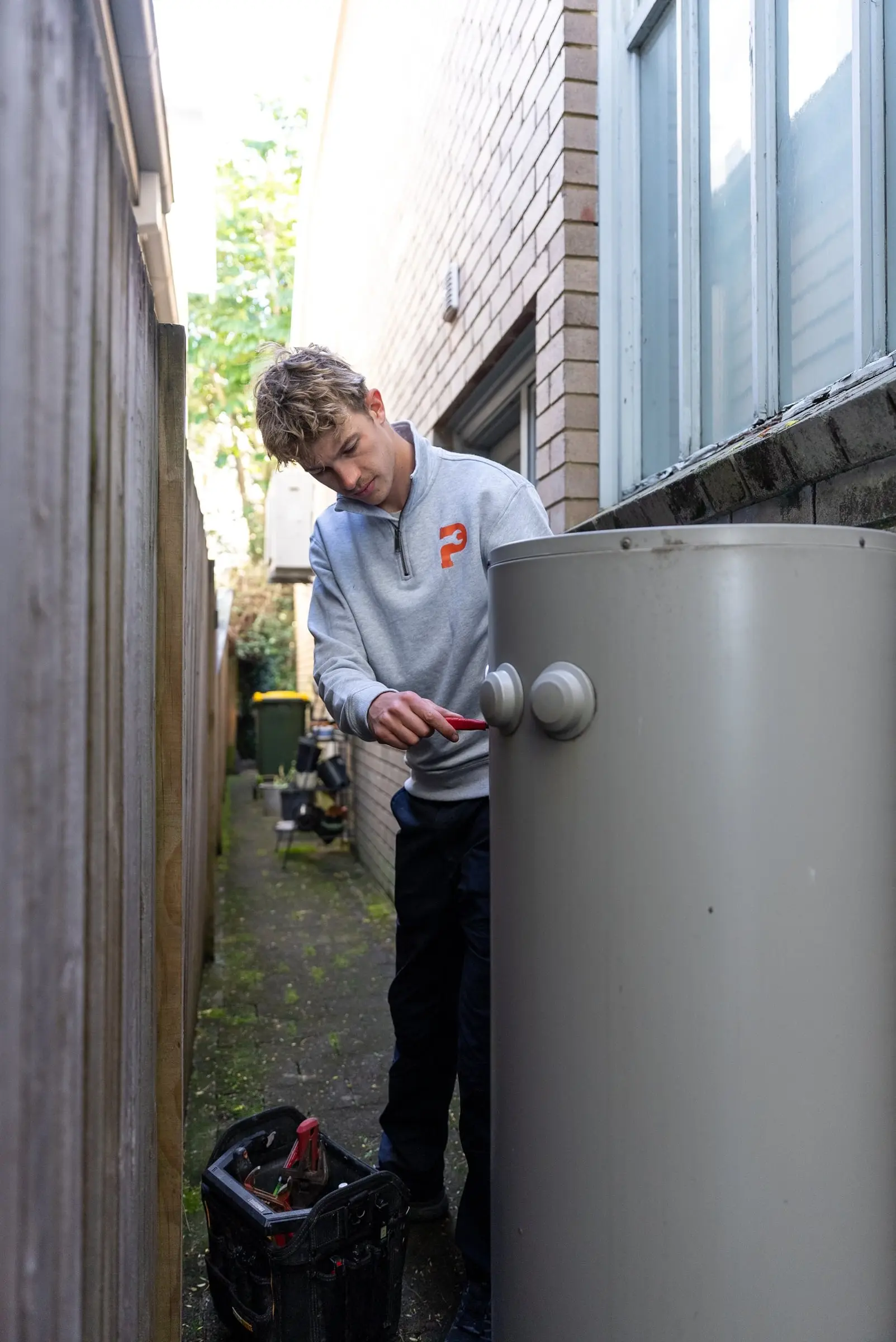
Electric storage heats water with an element inside a tank. Hot water leaves the tank at the top, cold water enters at the bottom, and the element heats stored water to the thermostat setting. A 400L electric system serves up to nine people, according to Rheem, and a heat pump up to six. Tank systems need a valve check every few years. The sacrificial anode may need replacing. The anode is a rod inside the tank that corrodes in place of the tank wall. Our electric hot water page covers element and thermostat replacement and tank sizing in full detail.
What Each System Costs in Sydney
What's The Damage published the installed price bands below in a Sydney guide dated November 2026. The bands include GST and cover the unit installed and connected:
| System type | Installed price band (Sydney) | Source |
|---|---|---|
| Electric storage | $760 to $2,850 | What's The Damage, November 2026 |
| Gas storage | $1,150 to $3,325 | What's The Damage, November 2026 |
| Heat pump | $2,850 to $5,700 | What's The Damage, November 2026 |
The system type drives the installed price, and the written quote names the type before any work starts. Switching from electric to gas adds a gas connection between $290 and $745 per point, priced in What's The Damage's November 2026 guide.
NSW Energy Savings Scheme
The NSW Energy Savings Scheme discounts the quote upfront where an eligible heat pump or solar system qualifies. Rebates usually apply to heat pump and solar systems only, though gas boosted solar is eligible. Ask whether the written quote already shows the discount, because that is where the saving lands.
Our Process
A hot water system replacement runs in five steps, from the written quote to the compliance paperwork:
- The look: We check the old system first, noting whether it runs on gas or electricity, its tank size and where it sits, so the quote matches the house.
- The quote: The quote arrives in writing before any work starts, on every job.
- The swap: We fit the new unit where the assessment shows it suits the house and its air circulation. A tempering valve belongs on the quote, because the National Construction Code caps heated water at the bathroom taps at 50 °C.
- The rules: Any plumbing, draining or gas work in NSW requires a licence or a certificate, whatever the cost. Gasfitting, defined by the Gas Supply Act 1996, covers connecting or disconnecting a gas appliance and installing or repairing a flue.
- The paperwork: After network gas work, the licensed gasfitter must hand over a certificate of compliance, under NSW licensing rules. We test the new system, and the Lifetime Labour Warranty covers the labour.
Why Choose Mr Local Plumbing
Mr Local Plumbing brings 15+ years' experience and 300+ five-star reviews to every hot water replacement, from a local, owner-led team born and raised right in the area. Four proofs stand behind each replacement:
NSW Contractor Licence
We work under contractor licence 498750C, issued by NSW Fair Trading, and the licence covers plumbing, draining and gasfitting work.
Honest Diagnosis
Before any work starts, we tell you exactly what's wrong with the storage tank, the element or the hot water system, and the right way to fix or replace it.
Fair, Upfront Pricing
The call-out fee is $0. Pricing runs fair and upfront, without surprises, and every job carries a written quote ahead of the work starting. Best Price Guaranteed applies on a written quote, and first-time customers get $65 off.
Lifetime Labour Warranty
The Lifetime Labour Warranty covers the labour on the replacement. Quality Workmanship Guaranteed stands behind the work itself.
Conclusion
The heat pump vs gas hot water pick turns on the running costs, the installed price and the outdoor space each unit needs. A heat pump runs cheaper than gas or electric storage, at $205 to $435 a year on peak tariff, according to Sustainability Victoria's 2025 model. The install costs more, though. Your written quote settles the type, the price and the NSW Energy Savings Scheme discount before any work starts.